
Work smarter, dig deeper: 10 AI tools for investigative journalists
By Benét J. Wilson, IRE & NICAR
My first introduction to AI was a Poynter-Koch Media and Journalism fellowship presentation by Caitlin Dewey, a writer and occasional essayist based in Buffalo, N.Y. In it, she demonstrated 11 ways journalists could use AI in practical and responsible ways.
After Dewey’s presentation, I was hooked. I went down the AI rabbit hole, expanding her premise that evolved into my own presentation, “How journalists can use AI ethically” — with the key word being ethically.
I started my career on a typewriter in 1985. I saw the rise of computers, the internet, social media and now, AI. Each time, I heard variations of “the machines are taking over.” What I always say is that those were all tools, and AI is another one that can help us do our jobs smarter and better.
Below are 10 tools you may want to try:
- Journalist’s Toolbox AI: Mike Reilley, a journalism senior lecturer at the University of Illinois-Chicago, has created what has become the home to all things AI of interest to journalists. It covers myriad topics, including data tools, image creation, investigative reporting, ethics, large-language models, AI and the environment and more. Subscribe to his newsletter and check out his YouTube training videos.

- Wondertools: The AI section of Jeremy Caplan’s must-read newsletter is a treasure trove of the latest tools, many with video demonstrations. Topics include Useful Tools to Start 2026, 10 AI Tools I Actually Use and Let AI Interview You.
- Claude Code: At IRE, we have our own pro subscription and we’ve been playing with it. The hot new thing with Claude is using it for vibe coding, which allows non-coders to create apps through prompts for tasks including portfolio websites, interactive maps, task lists for stories and more. I attended NICAR’s `“Vibe-coding” for experimentation and deadlines,” taught by Allan James Vestal, the Baltimore Banner’s senior data visualization reporter, and it was packed.
- Google Pinpoint: Blue Ridge Public Radio used this tool to track hundreds of court records to investigate why a plan to turn a former Ramada Inn into homes for the unhoused failed. Pinpoint allows teams to upload documents, video, audio, webpages, images, text and email to organize content and more easily search for information that informs stories.
- ChatGPT: New York City-based The City used this tool to create a map of the five boroughs showing the number of stories it published in each of them. “First, the good news: ChatGPT’s results for relevant neighborhoods and landmarks were not too wide of the mark,” wrote Tazbia Fatima. “It did not ‘hallucinate’ and make up nonexistent neighborhood names.”
- NotebookLM: The free version of this tool is very robust. You create a notebook and upload data including PDFs, Google Docs, Slides, web URLs, pasted text and audio/video links. Once uploaded, your documents are summarized, allowing you to ask questions, find key facts and produce briefing docs, FAQs, podcast overviews, flashcards and quizzes, all gleaned from your uploaded sources. Check out this demo notebook that covers the earnings reports for the top 50 corporations.
- summarize.tech: Drop a link to a long YouTube video and get an AI-generated summary. It’s especially helpful for lectures, a live event or a government meeting. Here’s a summary of a San Francisco School Board meeting.Violation Tracker: This database is home to 700,000+ civil and criminal cases from more than 450 agencies with penalties adding up to $1 trillion. It covers corporate misconduct in myriad industries resolved by federal regulatory agencies and the Justice Department since 2000. It also includes cases from state attorneys general and selected state and local regulatory agencies. Click here to see the cases against Purdue Pharma, broken down by industry, primary offense type, year, agency and penalty amount
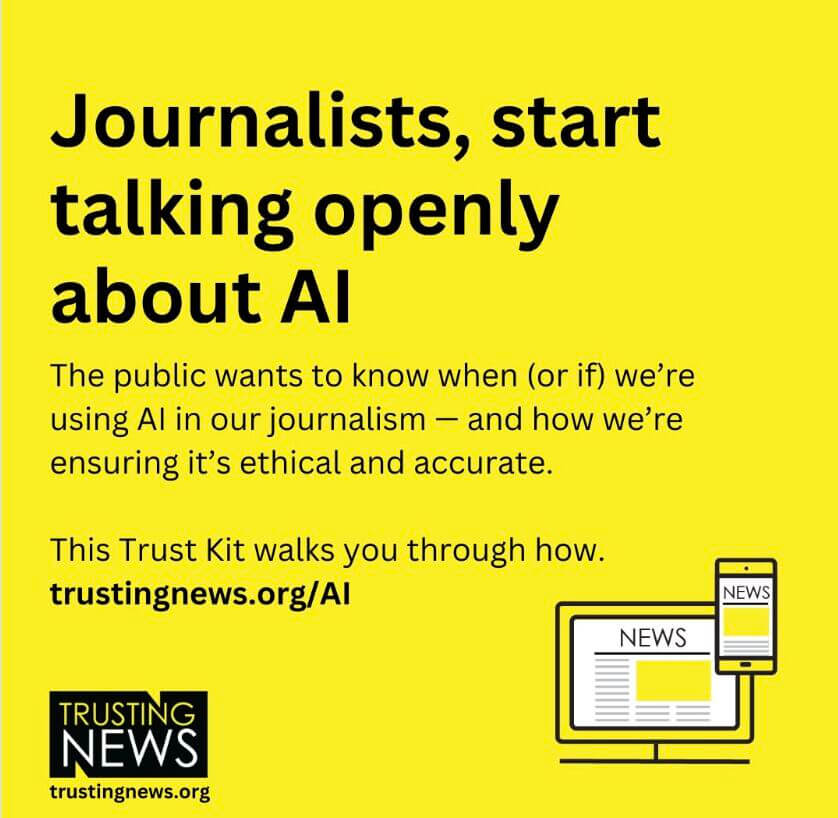
- Trusting News AI Trust Kit: The team, led by the iconic Joy Mayer, was among the first to understand that newsrooms continue to struggle when it comes to earning audience trust — and now AI has been thrown into the mix. The kit shows journalists how they can not only be transparent about how they use AI, but also help build audience trust in stories that use AI ethically.
- Poynter Institute: This self-directed online course, “AI for Journalists and Content Creators: From Understanding to Application,” is a great way to dip your toe into the AI pool. Topics covered in the course include: how generative AI is reshaping journalism, media and content workflows; detect and debunk AI misinformation, deepfakes and manipulated content; critically evaluate AI tools for accuracy, bias, style and reliability; and build practical policies for safe, effective AI use.