
Posts by adam@ire.org
Demanding release of detained journalist Mario Guevara
(September 23, 2025) — Investigative Reporters and Editors joins dozens of organizations in demanding the release of detained journalist Mario Guevara. Guevara was arrested June 14 in metro Atlanta while covering a protest, then transferred to Immigration and Customs Enforcement (ICE) custody, where he remains. He has been detained for more than 100 days —…
Read MoreNew IRE fellowship honors Susan Carroll
(September 23, 2025) — Investigative Reporters and Editors has a new fellowship in honor of the late Susan Carroll Alvarez, a fearless watchdog journalist beloved for her mentorship and leadership skills. Family members, friends and journalists around the country have raised more than $25,000 to create the new Susan Carroll Fellowship to support journalists covering…
Read MoreIRE 50th Anniversary Gala raises record $1.5 million for journalism training
(September 18, 2025) — Investigative Reporters and Editors hosted a star-studded 50th Anniversary Gala in New York City this week, bringing together the industry’s biggest trailblazers and raising more than $1.5 million for the grassroots nonprofit. With donations from $50 to $150,000, and the support of major funders including the ProPublica Board of Directors and…
Read MoreMichael Keaton to accept IRE’s Champion of Investigative Journalism Award
(September 4, 2025) — One of Hollywood’s most celebrated stars will join a parade of journalism legends in New York this month for the Investigative Reporters and Editors 50th Anniversary Gala, honoring five decades of grit, guts and glory. Michael Keaton, acclaimed actor, director and press freedom advocate, will receive IRE’s first Champion of Investigative…
Read MoreAdam Rhodes named editor of The IRE Journal
(Sept. 2, 2025) — IRE Training Director Adam Rhodes will take over editing The IRE Journal, Investigative Reporter and Editors’ online publication offering stories about investigative journalism, blueprints for award-winning work, useful tips for accessing public records and much more. “I’m excited to take the helm of the publication for so many reasons, but two…
Read MoreRemembering Paul Williams
By Doug Meigs In towering all-caps, a 1972 Omaha Sun headline proclaimed: “BOYS TOWN: AMERICA’S WEALTHIEST CITY?” followed by a biblical quote: “‘Give an account of thy stewardship…’ (Luke, 16)” So began an eight-page broadsheet investigation into the murky finances of Boys Town, an esteemed charitable institution that Father Edward J. Flanagan (now on the…
Read MoreThe rise, fall and (possible) resurgence of FOIA audits
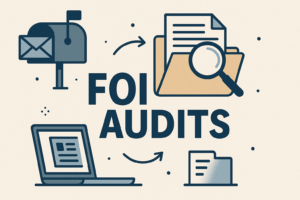
The rise, fall and (possible) resurgence of FOIA audits By Jordan P. Hickey, independent journalist On Aug. 23, 1999, just after 8 a.m., regional supervisors for the Arkansas Health Department started getting phone calls from county health officials. Not exactly the most breaking news of the day, but what set those calls apart was…
Read MoreMichael Keaton to receive IRE’s Champion of Investigative Journalism Award
(July 31, 2025) — Investigative Reporters and Editors is pleased to announce Academy Award-nominee Michael Keaton, star of “Spotlight” and “The Paper,” will receive the Champion of Investigative Journalism Award at IRE’s 50th Anniversary Gala in September. The gala, IRE’s first fundraiser of its kind, will be an entertaining evening of good food and fun…
Read MoreCapturing global investigative journalism’s oral history
By Silas Tsang, WTOL-TV There is a new effort to document the oral history of investigative journalism around the world. It’s the brainchild of investigative reporter Adiel Kaplan at Columbia Journalism School. The goal of her project is to preserve key perspectives on how the methods and tools of accountability reporting spread globally since the…
Read MoreDespite attacks, industry turmoil, journalists declare: We are staying
By IRE staff Editor’s note: Legendary journalist James B. Steele was one of the first to join IRE after it started in 1975 and has stayed active throughout the years in the organization, serving as a mentor for countless young journalists and participating in dozens of conference sessions, among other roles. A former contributing editor at…
Read More