
Feature
Female investigative journalists still face sexual harassment and bias, new study finds
Erin Orr was at the inception of her journalism career in the 1990s, working the business and real estate beat.
As she was interviewing a source at an evening business event, the man repeatedly called her “honey,” commented on her dress, and drew her in for a lingering embrace — all in front of his wife.
Read MoreFifty years after Don Bolles’ murder, we owe it to him to continue his courage
By Jeremy Duda, Axios On June 2, 1976, Arizona Republic reporter Don Bolles was backing out of a parking space at Phoenix’s Clarendon Hotel, where he’d been lured for a fake meeting, when a dynamite bomb exploded under his car. He used his last words to tell paramedics and bystanders who he thought was responsible,…
Read MoreWhat I learned from Diana R. Fuentes
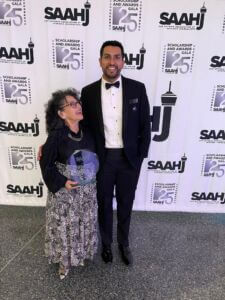
What I learned from Diana R. Fuentes by Francisco Vara-Orta I never felt like I had enough time in DeeDee’s presence because I genuinely enjoyed being with her. Even though we lived in the same city, we didn’t see each other often since she was always on the go. And when we did, she was…
Read MoreDon’t know what to attend at NICAR26? The IRE staff is here to help!
So you’ve landed in Indianapolis. You’re at the JW Marriott. You’re checking the schedule and….. whoa. It’s pretty overwhelming, right? With more than 200 hours of programming spanning nearly a week, it’s hard to plan what to see, who to talk to and when to go where. But the IRE staff is here to help…
Read MoreThe Alabama Solution: Journalists Hope to Inspire More Ethical Prison Reporting
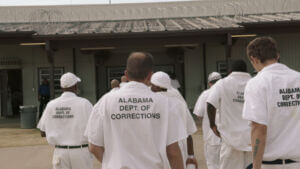
By Victoria Valenzuela, independent journalist When Charlotte Kaufman and Andrew Jarecki visited Easterling prison in Alabama as media seven years ago, they didn’t know what to expect — but they knew that it is rare to get an opportunity to report from a prison, so they took the chance. What started as a filmed visit…
Read MoreInside The New York Times’s A.I. toolkit
Inside The New York Times’s A.I. toolkit By Duy Nguyen, The New York Times; Illustration by Juliana Castro Varón, The New York Times The daily reality of journalism often involves painstaking work that, while important, has little to do with breaking a story. It’s the mundane task of sifting through thousands of documents, the repetitive…
Read MoreHonoring longtime IRE member and mentor Susan Carroll

Honoring longtime IRE member and mentor Susan Carroll By Lise Olsen, The Texas Observer As a monster storm approached in August 2017, my friend Susan Carroll arranged for others to care for her young children in order to camp out in the Houston Chronicle newsroom along busy Loop 610. She stayed there awaiting the arrival…
Read MoreRemembering Paul Williams
By Doug Meigs In towering all-caps, a 1972 Omaha Sun headline proclaimed: “BOYS TOWN: AMERICA’S WEALTHIEST CITY?” followed by a biblical quote: “‘Give an account of thy stewardship…’ (Luke, 16)” So began an eight-page broadsheet investigation into the murky finances of Boys Town, an esteemed charitable institution that Father Edward J. Flanagan (now on the…
Read MoreCapturing global investigative journalism’s oral history
By Silas Tsang, WTOL-TV There is a new effort to document the oral history of investigative journalism around the world. It’s the brainchild of investigative reporter Adiel Kaplan at Columbia Journalism School. The goal of her project is to preserve key perspectives on how the methods and tools of accountability reporting spread globally since the…
Read MoreDespite attacks, industry turmoil, journalists declare: We are staying
By IRE staff Editor’s note: Legendary journalist James B. Steele was one of the first to join IRE after it started in 1975 and has stayed active throughout the years in the organization, serving as a mentor for countless young journalists and participating in dozens of conference sessions, among other roles. A former contributing editor at…
Read More