
On the Road
Help us plan CAR13
There’s still time to help us plan the 2013 CAR Conference in Louisville, Feb. 28-March 3. We’ve been getting some great session ideas, but still want to hear from you. Send us suggestions for panels, demos, hands-on classes, speakers and anything else you can come up with through Tuesday, Sept. 18. Submit your ideas here.
Read MoreCool tools to cover the election
By Doug HaddixKiplinger Program directorKiplinger Program in Public Affairs Journalism, Ohio State University A new mobile app called Ad Hawk created a buzz this weekend during an IRE Election Watchdog Workshop at The Ohio State University. It’s an amazing new public service offered by the nonpartisan Sunlight Foundation in Washington, D.C. Here’s how it works:…
Read MoreFinishing the CAR story, overcoming initial hurdles
By Laura KrantzGatehouse Media This summer I attended my first IRE conference, in Boston. I really wanted to learn Microsoft Excel skills and I did, thanks to patient IRE staff. But more importantly, I was inspired by all the ruthless journalists using creative ways to mine for data and writing compelling stories. I left itching to…
Read MoreJoin us in Columbus for an Election Watchdog Workshop
IRE is bringing its Election Watchdog Workshop to Columbus, OH on August 24-25. Arm yourself with the knowledge you need to cover the 2012 elections. Get in-depth tips and strategies to follow the campaign cash as well as help your audience track the behind-the-scenes battle for influence, backgrounding candidates, making sense of the new world of…
Read MoreBehind the story: Who Can Vote?
By Leonard Downie Jr. Weil Family Professor of Journalism, Walter Cronkite School of Journalism and Mass Communication The News21 national investigation of voting rights in the U. S., which was launched August 12 on its own website, votingrights.news21.com, and in news media around the country, began early this year with a video-conferenced spring semester…
Read MoreBehind the Story: The benefits of sticking with a story
Photo credit:WUSA 9 It’s hard to keep saying everything is fine when documents prove otherwise. Although the General Services Administration continually denied knowledge of a “death list,” investigative reporter Russ Ptacek discovered the list while working for Kansas City’s KSHB-TV. He continued the investigation at WUSA 9, in Washington, D.C. A GSA employee created the “death list” to…
Read MoreBehind the Story: Disproportionate lending by race discovered with data
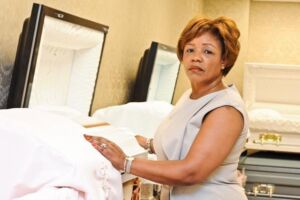
Photo credit:Joanne Lawton/Washington Business Journal It’s one thing to say African American entrepreneurs are recovering from the economic downturn slower than white entrepreneurs, it’s another to explain why. That’s what Washington Business Journal reporter Bryant Switzky did using a database from the Small Business Administration and other datasets related to the Community Reinvestment Act. “The…
Read MoreGhost Factories: Behind the Story and Interactive

By Anthony DeBarros USA TODAY In April, after USA TODAY published its Ghost Factories investigation into forgotten lead smelters, we heard from several people who wanted to know more about how the project came together — particularly the online package that included details on more than 230 of the former factories. The following is an…
Read MoreBehind the Story: Multiple government websites help journalists get around FOIA requests
Not having access to the list of firms disqualified from the Service-Disabled Veteran-Owned Small Business program didn’t stop Dayton Daily News reporters from determining which companies were debarred from government contracts or from identifying some of the companies under investigation or disqualified from the program. The article, “’Rent-a-vet’ scam proves costly to taxpayers, businesses,” gives…
Read MoreDig deeper with historical Census
Look out social media, stand back hottest app of the day, I have a new research obsession: The 1940 Census. Thanks to the National Archives you can now locate responses for individuals and families from the 1940 Census. Details include age, gender, marital status, education, employment, residency in 1935 and more. While there isn’t a…
Read More