
Diversity & Inclusion
Diversity & Inclusion Mission Statement
Approved June 14, 2023, by the IRE Board of Directors
IRE strives to reflect diversity and inclusion in all of its efforts and offerings. It is a foundational value, as a diverse membership strengthens our organization and produces higher-quality journalism that more accurately reflects the communities we serve. By centering inclusivity — both in our public programming and internal staffing policies — we help sustain IRE’s future and ensure that our members thrive as journalists, educators and students.
American journalism is in a state of flux, with a decline in newsroom employment that can limit what stories are told and who has the opportunity to tell them. That threatens diversity in an industry that still does not reflect the diversity of the nation. IRE is committed to taking practical steps to address the ongoing impact of such growing inequality within the industry. IRE will maintain the necessary data collection to assure membership of our commitment to diversity and inclusion.
IRE develops programming, networking opportunities and training to create a safe space for all journalists, including journalists of color, LGBTQ+ journalists, journalists of different gender identities, journalists with disabilities and journalists of different religious beliefs and spirituality. For IRE, inclusivity means welcoming and supporting people with intersecting identities and backgrounds. IRE seeks to maintain a discrimination-free organization where everyone can learn and be supported professionally — including at conferences and events held in states with evolving laws and legal protections.
Data on DEI efforts at IRE
In 2019, IRE started collecting more data on the racial makeup of its membership. We found that of those who answered, at least 14 percent identified as a person of color. That number has risen to at least 30 percent of IRE membership. Some members decline to provide race/ethnicity information, so the percentage may be higher. In October 2024, available data showed a total of 4,946 members. Of those, 4,334 responded to the question about race and ethnicity and 1,500 identified as POC. That level has remained the same since early 2026.
Even at 30 percent, IRE is doing considerably better than U.S. newsrooms; while a complete database is lacking, the last count by the now-defunct News Leaders Association a few years ago put the rate of JOCs in newsrooms at about 20 percent.
IRE is committed to increasing the diversity of its membership, as well as understanding how that membership is reflected in its programming. In 2023, the organization began collecting more data on the racial and gender makeup of its awards entrees in an effort to begin providing more data transparency on who is entering and winning our annual awards.
IRE Code of Conduct
Investigative Reporters & Editors is committed to providing a friendly, safe and welcoming environment for all, regardless of race, gender identity or expression, ethnicity, sexual orientation, physical ability, age, appearance or religion.
IRE supports vigorous debate and welcomes disagreement, while maintaining a civil and respectful community. Discriminatory or harassing behavior is not permitted.
IRE may take any action it deems appropriate to deal with those who violate our principles, including exclusion from our events, forums, listservs and the organization itself.
IRE AccessFest (formerly DBEI Symposium)
AccessFest is IRE’s annual virtual-by-design conference. The two-and-a-half-day event will take place online, October 8-10, 2026. AccessFest has two main goals: an opportunity for attendees to get IRE’s more traditional investigative and data training — from anywhere in the world — at a fraction of the cost of the in-person conferences as we reprise the most well attended sessions virtually. The other purpose remains historically rooted in a symposium IRE launched after the 2020 "racial reckoning" that centered diversity, belonging, equity, and inclusion both in news coverage and within the newsroom given the changing demographics we cover globally. While the IRE and NICAR conferences have some sessions on these topics, AccessFest allows journalists to dive deeper. This past year, we had nearly 500 attendees, which is increasing year after year.
The conference started out as the two-day “DBEI Symposium” in 2021 and in 2022 and was expanded and rebranded as AccessFest in 2023. The reframing is part of the organization's commitment to accessibility; be it not only to data, docs and sources but also in consideration of our members' health, caregiving responsibilities and/or financial constraints. The symposium's goal was to help journalists with newsroom diversity issues and with investigating inequality in their communities, from education and business to housing and police accountability, in addition to building greater community in the investigative journalism space, which AccessFest continues to heavily center around. Our keynote speakers at the last four conferences have been Black, Asian, Latine and Native/Indigenous to spotlight key perspectives our members seek.
Chauncey Bailey Journalist of Color Investigative Reporting Fellowship
MSI Workshops
The Rick Gevers-Karen Burns Diversity Endowed Fund for College Journalists was established to support training at Historically Black Colleges and Universities, Hispanic-Serving Institutions, Minority-Serving Institutions and other campuses serving student journalists of color.
In September 2024, IRE partnered with the Ida B. Wells Society for Investigative Reporting to conduct the Gevers-Burns Fund's first regional event, the HBCU Investigative Journalism Workshop at the Atlanta University Center Library. Student journalists of color came from throughout Georgia and other states.
In March 2025, IRE partnered with the University of the Incarnate Word in San Antonio and other local sponsors for the second Gevers-Burns event, the HSI Workshop for Investigative and Data Journalism. It was attended by student journalists of color from numerous Texas universities and other states.
In 2026, IRE held the Indigenous Student Investigative Journalism Workshop at the Oklahoma Center for Nonprofits in Oklahoma City. It provided training for Indigenous students and students of all backgrounds attending Tribal Colleges and Universities, Asian American and Native American Pacific Islander-Serving Institutions, Alaska Native- and Native Hawaiian-Serving Institutions and Native American-Serving Nontribal Institutions nationwide. The MacArthur Foundation provided support toward scholarships.
The IRE Journal
These issues of the IRE Journal are free for anyone to download.
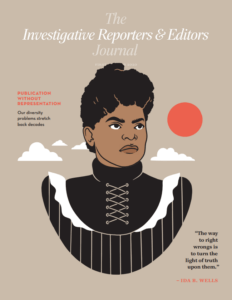
A special diversity and inclusion issue of The IRE Journal, released in early 2020, features articles and columns by journalists of color, with extensive coverage of industry challenges and opportunities.
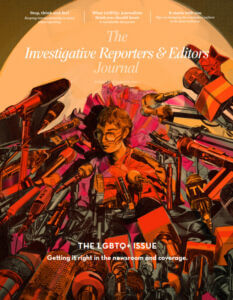
A special issue of The IRE Journal, printed fourth quarter 2021, focuses solely on LGBTQ+ issues in the newsroom and in coverage. The 38-page magazine features articles and columns by journalists who identify as LGBTQ+ and focuses on tips to help journalists get their coverage right.
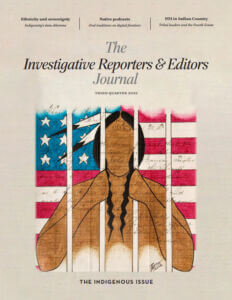
The third quarter 2023 edition of The IRE Journal explores Indigenous news. This special themed edition of the magazine has been made available to the public free of charge with the goal of improving industry coverage of Indigenous communities and highlighting the important work of Indigenous journalists.
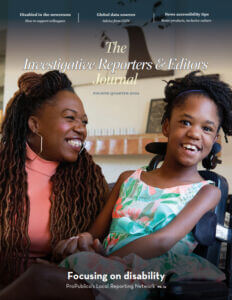
The fourth quarter 2024 edition of The IRE Journal dives deep into disability issues with articles on newsroom inclusion, investigation backstories, beat-writing advice, global data sources, inequality coverage, news accessibility — and more.
Training
IRE is an organization that believes in the skills of students and entry-level journalists as much as its established or seasoned journalists — it is in fact at the very heart of building a diverse pipeline of journalists.
IRE weaves in examples of culturally competent reporting throughout our training materials, undergoing a massive overhaul in 2022 to make sure the work was including people from all backgrounds and centering more discussions on framing that tend to harm historically marginalized communities. In 2024, we've added more topical sessions including religion and immigration given global tensions and now offer up to a day of training on DBEI for newsrooms and classrooms. We have updated those materials for 2025 and 2026 given the changes we have seen in this area of work.
We also work to ensure regional diversity as well: training organizations throughout the country and world through virtual and in-person trainings. For example, our Total Newsroom Training has visited nearly every state in the U.S., and territories such as Puerto Rico and the U.S. Virgin Islands since its inception almost a decade ago - with more to come.
In the wake of the racial reckoning in 2020, we also developed a presentation on the urgency of creating a more inclusive newsroom. The 90-minute training session was developed, vetted, and led by our members and trainers from historically marginalized backgrounds. In it, we provide concrete steps that newsrooms can take to foster an environment that benefits journalists as well as the public. This has become one of the more popular trainings we offer, and in late 2022, we expanded our DBEI-focused 90-minute training sessions to other topics such as sourcing and how to ethically and accurately cover those historically marginalized. We further expanded those offerings to up to 12 hours of training in 2024 on various DBEI topics.
We also have offered more accessible training such as webinars on diversity and inclusion, including our best attended session of our 2020 webinar series during the COVID-19 era. You can still view that free session online; IRE membership is not required.
In 2026, the IRE board's diversity & inclusion committee launched its own initiative to encourage and support journalists of color to seek management roles in their news gathering spaces and greater industry. The IRE Investigative Managers of Color Task Force created a channel on JOC Slack, gathering 50 people in the first few weeks, and a webinar series in May to help build community and trade skills in this pursuit of more representation in our industry.
Speakers & Trainers
Speakers don't always fill out their demographic data so we only get snapshots of "at least" data. At minimum though, journalists of color comprised at least 30 percent of speakers and trainers at the most recent annual NICAR and IRE national conferences but that number is likely higher. For the DBEI symposium and at AccessFest, that diversified racial representation was higher at around 40 percent from data we do have, and again likely much higher for JOCs in reality - since only half of the speakers usually fill out their demographic form.
Women comprised half of speakers at the NICAR data journalism conference and roughly 60 percent of speakers at the most recent IRE national investigative journalism conference. IRE typically features more than 350 speakers and trainers for each conference.
In addition, IRE regularly features a diverse slate of speakers at its regional workshops and online training.
Partnerships
Fellowships & Scholarships
Governance & Operations
Cheryl W. Thompson served as IRE’s first Black board president from 2018-2021. Following her time as president, she was succeeded by Mark Walker, who also is Black, from 2021-2023. Nearly half of the board is comprised of journalists of color- with six folks representing different racial and ethnic communities including the full BIPOC spectrum - and also includes two queer people. Women make up the majority of the IRE board now, reflecting gender parity of both the U.S. and our overall worldwide membership. All board committees include journalists of color. In addition, journalists of color comprised about one third of the regional planning committees for the most recent in-person NICAR and IRE national conferences. The board is currently led by out gay president Josh Hinkle, with other queer board members now serving alongside him.
Of the seven judges for the 2023 IRE Awards, three were journalists of color and three were women. The makeup of judges has reflected similar parity in recent years consistently.
In 2021, IRE’s board of directors created a diversity task force that has since become a permanent diversity and inclusion committee. The board also has convened an international committee with our member from South Korea, Hyuntaek "Tag" Lee, leading the group and is helping plan a workshop in Canada in 2024.
IRE's most recent executive director, the late Diana Fuentes was Latina, and in 2021, IRE promoted Francisco Vara-Orta, who is Mexican-American and gay, from training director to director of diversity, belonging, equity and inclusion before elevating him to the interim deputy executive director role after Fuentes' sudden death. In 2022, Adam Rhodes and Laura Moscoso made history as they joined IRE's training staff. Rhodes, who is half Cuban, is IRE's first non-binary staff member. Moscoso is Puerto Rican and Dominican and is the first woman of color on the IRE training staff. Vara-Orta and Rhodes also represent different parts of the LGBTQ+ community on staff. In late 2024, they were joined by Laura Kurtzberg, who is Mexican-American, Jewish and part of the LGBTQ+ community. Joining them in 2026 was Benét J. Wilson as our newest training director, and our first Black woman in the role full-time.
The IRE board and staff received training from the Maynard Institute for Journalism Education during their respective retreats in August of 2022. Maynard instructor Jean Marie Brown led the Fault Lines trainings which is based on addressing personal bias Fault Lines® of race, gender, sexual orientation, generation, geography and class, as they apply to journalists, newsroom collaboration and coverage. The majority of the staff also has taken the Freedom Forum's Workplace Integrity Training led by Jill Geisler to better "produce environments free of harassment, discrimination, and incivility, and filled with opportunity, especially for those who have traditionally been denied it." In 2024, IRE staff underwent accessibility training led by Patrick Garvin at a retreat in order make the organization's work more accessible to disabled members and partners.