
Posts Tagged ‘FOIA’
Muzzling the Freedom of Information Act
The federal government is making it increasingly difficult, and prohibitively expensive, for journalists to get files that agencies want to keep secret, despite President Obama’s pledge of transparency, IRE President David Cay Johnston writes for Newsweek. That’s bad news for authors, editors, producers, writers, and publishers, as well as anyone else interested in democratic government.…
Read MoreCommittee to Protect Journalists releases report on Obama administration and the press
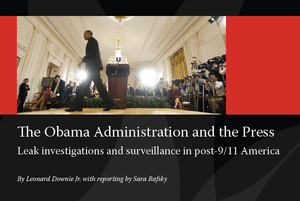
The Committee to Protect Journalists released a report today titled The Obama Administration and the Press, stating that “electronic surveillance programs deter government sources from speaking to journalists.” President Barack Obama pledged open government as he entered office, but his administration has fallen far short of those promises, according to CPJ. Since 2009, six government…
Read MoreA look at how journalists are handling the shutdown
Journalists have been searching for alternative resources after the government shutdown caused many online databases to go down and government offices to close as employees went on furlough. For more information about how the shutdown is affecting news coverage, see the stories below. For information on closed FOIA offices:Both the Reporters Committee for Freedom of…
Read MoreTracking what data are available and where during the government shutdown
We reported yesterday that many government agencies had shut off access to their online data services, and that the NICAR database library was a good source for finding government data during the shutdown. Poynter today has an interesting post on the challenges the shutdown has caused for data journalists. If you want more background, the…
Read MoreReport from U.S. Senate committee claims EPA lacks transparency
Minority members of the U.S. Senate Environment and Public Works Committee released a report on Sept. 9, 2013 claiming that the EPA has “a dismal history of competently and timely responding to FOIA requests,” has failed to adequately train staff members on FOIA policies, has shown bias in deciding to honor fee waiver requests, and…
Read MoreMichigan agencies estimate thousands of dollars for access to records
Michigan Governor Rick Snyder’s administration had preached transparency, according to the Lansing State Journal, but is charging exorbitant amounts for access to state contract records. The Lansing State Journal sought contracts from the Michigan Department of Technology, Management & Budget, the repository for 1,200 contracts worth $32 billion between the state and outside vendors. The…
Read MoreCivil Beat in Hawaii announces creation of new public records law center
Journalists from an online news service in Hawaii have started a public service law center to help citizen’s navigate the state’s open record laws. Honolulu-based Civil Beat reports that Hawaii has decent public information laws, but in practice state and county government fail to follow and enforce the law. Patti Epler of Civil Beat describes…
Read MoreMuckRock analysis finds 27 percent of FOIA requests still unfulfilled after three months
MuckRock, a public records service that files and tracks requests on behalf of journalists, researchers, activists and historians, recently analyzed 907 requests completed by its users. The analysis found about 42 percent of federal Freedom of Information Act requests were completed on time, and 27 percent of those 907 requests are still without a response after…
Read MoreCountries with longtime FOI laws have less corruption, better human development
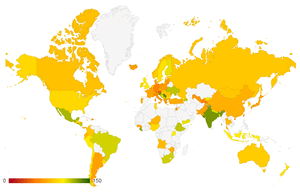
The Center for Law and Democracy rates FOI law effectiveness by country. Freedom of Information Act advocates have consistently claimed that institutionalizing the right to information will benefit countries, particularly in addressing corruption. They are not lying. By comparing indices on corruption, human development, and years of having an FOI law across 168 countries, I…
Read MoreFOIA Machine sees early success on Kickstarter

On July 16, a team of journalists and developers launched a Kickstarter campaign for a project called FOIA Machine. They asked for $17,500 to build a tool to help journalists and citizens request public information — a “TurboTax for government records,” the team called it. Two days later, they passed that goal. A week later,…
Read More